
By Chelsea Kirk, et. al. - Strategic Actions for a Just Economy (SAJE) and Alliance for Community Transit Los Angeles (ACT-LA), May 2023
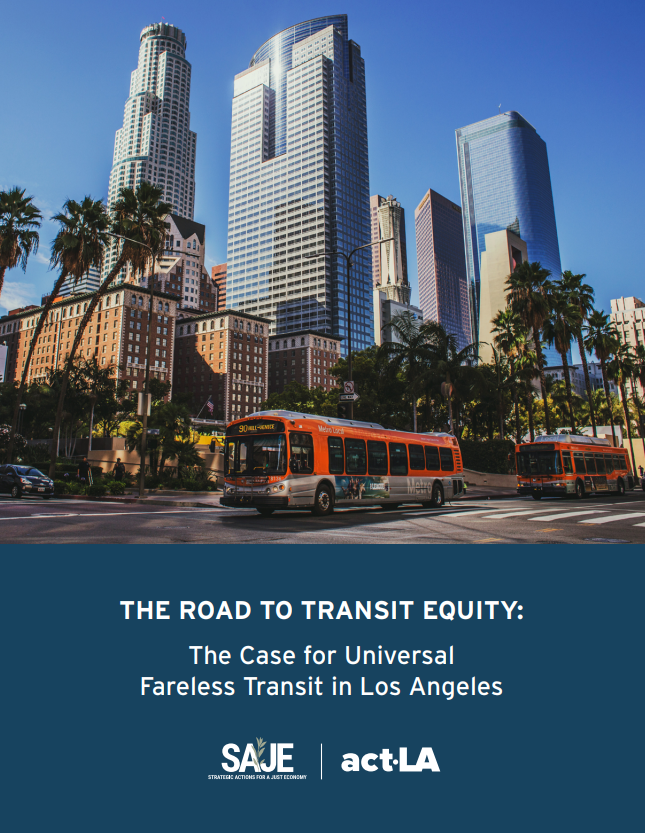 Los Angeles is a place like no other, and that is especially true when it comes to public transportation. Its primary public transit agency, the Los Angeles Metropolitan Transit Authority (LA Metro), is one of the largest in the nation, with nearly one-fourth of California residents living in the agency’s 1,433-square-mile service area.
But LA Metro currently serves very few Angelenos—just 78 out of every 1,000 Los Angeles– area residents ride the bus or train. The majority of public transit riders in Los Angeles are low-income people of color who are financially burdened by the region’s high housing and transportation costs. Seventy-six percent of LA Metro ridership identifies as Latinx or Black, and approximately 63% of riders earn household incomes of less than $25,000 annually, with 40% subsisting on household incomes under $15,000 per year.
Additionally, LA Metro, unlike most public transit agencies in large U.S. cities, nets very little revenue from fares. Government grants and sales taxes mostly fund the agency’s operations and capital expenses, with fares projected to make up just 4.8% of the agency’s operations budget in fiscal year 2023. LA Metro has attempted to solve the financial burden of fares on their riders through fare capping and means-tested discount programs. These initiatives are not only expensive to run, but they also have low enrollment rates. And, ironically, if LA Metro successfully enrolled all those eligible for discounts, their earnings from fares would be even more negligible than they are now. In effect, the agency is spending millions of dollars to get the majority of its riders to pay less in fares. Why not just go fareless?
Download a copy of this publication here (PDF).